


AI is no longer just a tech story. This month it changed your hospital, your phone, and your paycheck. Here are the six stories you need to know from May 2026.
1. Google’s AI Is Now Your Personal Agent
The biggest announcement to come out of Google I/O 2026 was not a new model or a new feature — it was a fundamental shift in what AI actually does. For the past few years, AI assistants have answered your questions. Now, Google’s latest release, Gemini Spark, acts for you. Described as a ‘personal agent’, Gemini Spark can book appointments, summarise your inbox, draft replies, and manage your digital life without you having to ask for each step. Launching this week for Google AI Ultra subscribers in the US, it represents the clearest example yet of AI crossing the line from tool to assistant. Alongside Gemini Spark, Google also announced Daily Brief — a feature that reads your Gmail and Calendar each morning and delivers a personalised summary of what deserves your attention and what you can ignore. It is powered by Gemini 3.5 Flash, a new model that Google says outperforms its predecessor on every major benchmark while remaining fast enough for everyday use. One quieter but significant announcement: Google is rolling out content authenticity labels across its products. Images will now be tagged to show whether they were taken by a camera or generated by AI — a first for a platform of this scale, and a meaningful step toward tackling misinformation.
2. Apple Paid Google $1 Billion to Reinvent Siri
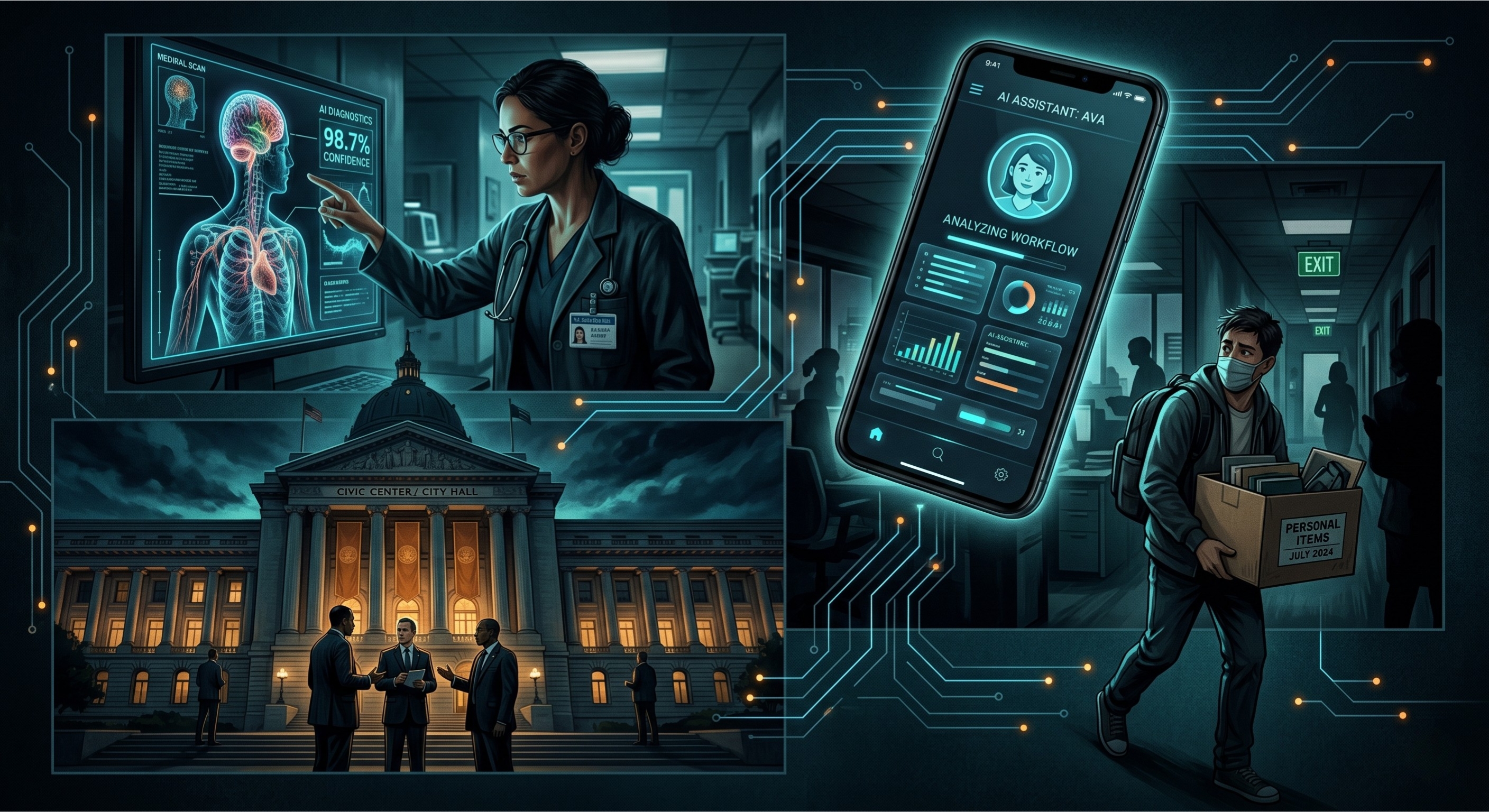
It is one of the most surprising technology deals in recent memory. Apple and Google are fierce rivals — they compete across phones, browsers, search, and now AI. Yet in January 2026, Apple quietly struck a multi-year licensing agreement: Google’s Gemini will become the intelligence behind a rebuilt Siri, at a reported cost of around $1 billion per year. More than two billion iPhones, iPads, and Macs will feel the difference. The reason is straightforward. Apple tested multiple AI providers — including OpenAI and Anthropic — and concluded that Google’s Gemini offered the best combination of capability, safety, and scalability. The custom model Apple licensed is a 1.2 trillion-parameter system, eight times larger than anything that previously powered Siri, and built specifically to Apple’s requirements. For users, this means a dramatically smarter Siri is on the way. Apple has confirmed that its private cloud compute protections remain in place, meaning your data is processed without being directly exposed to Google’s servers. The new Siri is expected to make its public debut with the iPhone 17 launch later in 2026.
3. AI Is Saving Lives — and Billions — in Hospitals
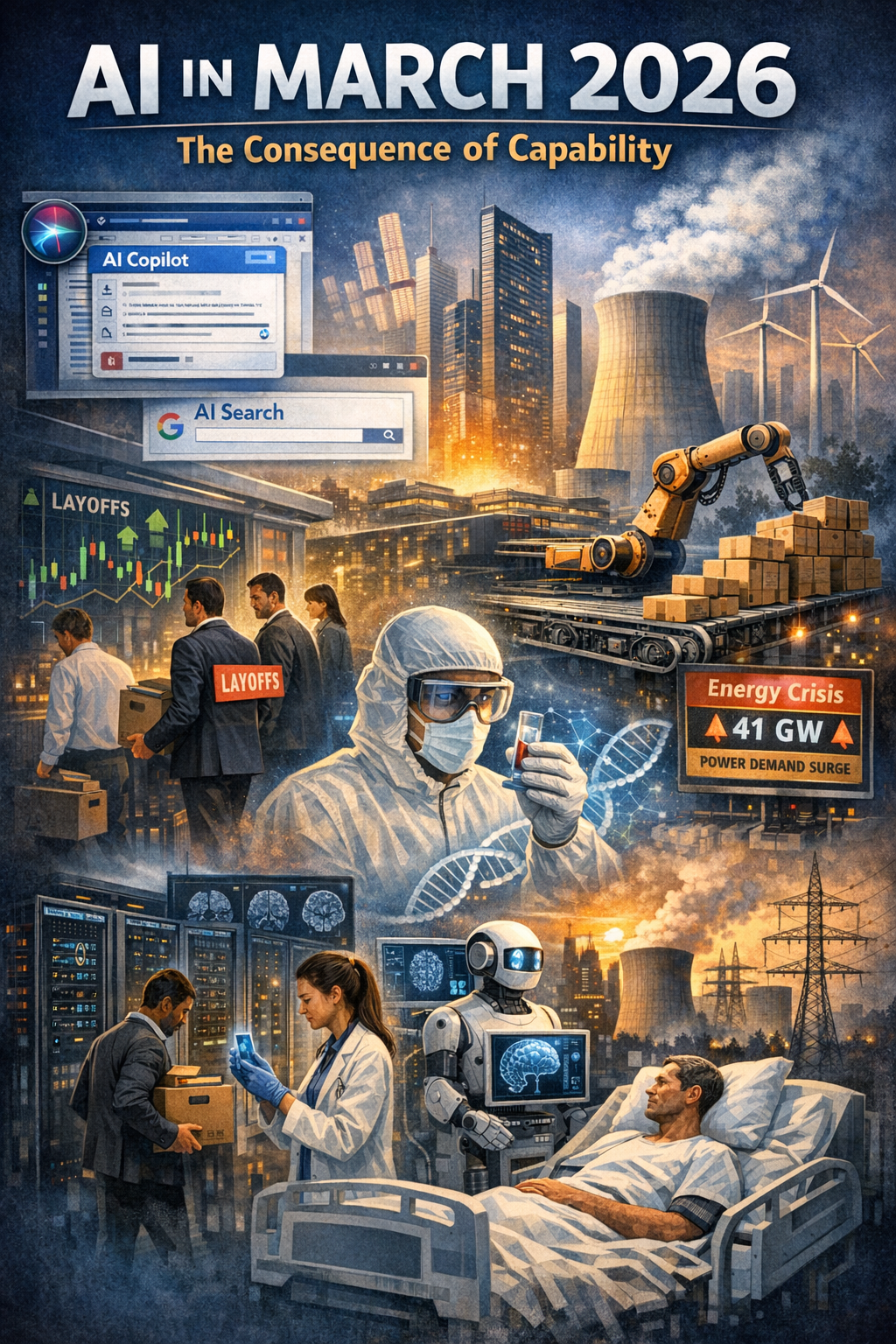
Of all the sectors being reshaped by AI, healthcare may be the one where the stakes are highest and the changes most tangible. In May 2026, a growing body of evidence confirmed that AI is delivering real results in clinics and hospitals around the world. On the diagnostic front, AI systems can now detect multiple types of cancer from a single medical scan, identifying patterns that are beyond the reach of the human eye. Leading health systems including Mayo Clinic and Mount Sinai in New York are deploying AI agents to automate the repetitive administrative tasks — notes, scheduling, billing — that consume as much as a third of a clinician’s working day. The financial numbers are striking. UnitedHealth Group projects that AI-driven automation will save it close to $1 billion in 2026 alone, largely from improvements to billing and revenue management. HCA Healthcare expects around $400 million in similar savings. And digital health startups raised $4 billion in venture capital funding in the first quarter of 2026 — the strongest start to a year since the pandemic peak. Perhaps most exciting is the acceleration in drug discovery. AI-designed drug candidates are now entering clinical trials, compressing the timeline from laboratory concept to human study from decades to just a few years.
4. AI Is Cutting 16,000 Jobs a Month and Gen Z Is First in Line
For all the excitement about AI’s potential, May brought some sobering data about its immediate human cost. Research published by Goldman Sachs found that AI is eliminating roughly 25,000 jobs per month in the United States, while creating around 9,000 — a net loss of 16,000 positions every month, a pace that appears to be accelerating. The workers bearing the brunt are not the ones many expected. Gen Z — people in their early-to-mid twenties who are just entering the workforce — are disproportionately concentrated in exactly the types of roles AI displaces most easily: data entry, customer service, administrative support, and junior content creation. Without the specialised experience that protects more senior workers, they have few buffers against automation. The picture is not entirely bleak. Experienced workers are, in many cases, being augmented rather than replaced. AI makes senior professionals faster and more productive, which is reflected in wage data: workers with strong AI skills are already earning 56 per cent more than peers doing the same job without them. The clear message from the data is that the ability to work effectively with AI tools is becoming one of the most valuable skills in the modern economy — as essential, perhaps, as knowing how to use email was in the 1990s.
5. The White House Did a U-Turn on AI Rules
The Trump administration arrived in Washington with a clear position on AI regulation: against it. Federal policy throughout early 2026 emphasised an ‘innovation-first’ approach, and the administration actively pushed to prevent states from passing their own AI rules. That position appeared to shift dramatically in May. The White House drafted an executive order that would have established a national security review process for frontier AI models — requiring companies to submit powerful new systems for government evaluation before they could be publicly released. The framing was explicitly about national security rather than ethics or consumer protection. The trigger, according to reporting at the time, was Anthropic’s new ‘Mythos’ model, which was reportedly powerful enough to alarm national security officials. But the executive order was scrapped just hours before its scheduled signing ceremony — reflecting genuine disagreement inside the administration about whether even security-framed oversight was a step too far. The result is a policy vacuum. With the federal government unable to act, individual states are filling the gap. California, Colorado, Texas, and New York are among those advancing their own enforceable AI legislation in 2026, creating a complex and sometimes contradictory patchwork that AI companies must now navigate state by state.
6. A $200 Million Bet: AI for the World’s Most Vulnerable
Not every AI story in May was about billion-dollar rivalries or market disruption. One of the most significant announcements of the month was quieter in tone but potentially wider in reach: Anthropic, the company behind the Claude AI assistant, and the Bill & Melinda Gates Foundation announced a $200 million, four-year partnership with an explicit mission to bring AI benefits to communities that the technology industry has largely ignored. The partnership targets four areas where AI could have an outsized impact in low-resource settings: rural healthcare diagnosis, crop disease detection for smallholder farmers, literacy tools in local languages, and financial access for unbanked communities. The goal is not to adapt existing AI products for these contexts but to build specifically for them — a meaningful distinction in a field where most tools assume fast internet, English fluency, and expensive devices. The announcement matters for a simple reason: almost all AI development to date has been optimised for a relatively narrow slice of the global population — wealthy, English-speaking, and tech-savvy. This partnership represents one of the most serious attempts yet to change that. The Gates Foundation brings decades of implementation expertise in global health and development, while Anthropic brings the technical capability to build systems capable of operating in constrained environments.
What to Watch in June
Three stories are worth following closely as the month unfolds. Gemini Spark goes live Google’s personal AI agent launches this week. The early reviews will be revealing: does it genuinely act as a capable agent, completing tasks with minimal oversight, or does it fall back on the familiar pattern of answering questions and generating text? The answer will set the tone for the entire AI agent category in 2026. Apple WWDC and the new Siri Apple’s annual developer conference in June is expected to include the first public demo of the rebuilt Gemini-powered Siri. It will be the first real test of whether $1 billion in annual licensing fees actually makes Siri useful — and whether Apple’s privacy protections hold up in practice. The US vs states AI law showdown With the White House executive order dead and Congress still gridlocked, the legal battle between federal inaction and state-level AI legislation is heating up. Expect lobbying, lawsuits, and potentially a Supreme Court question about whether states have the authority to regulate technology in ways the federal government has declined to.